

Hecate in Tomis

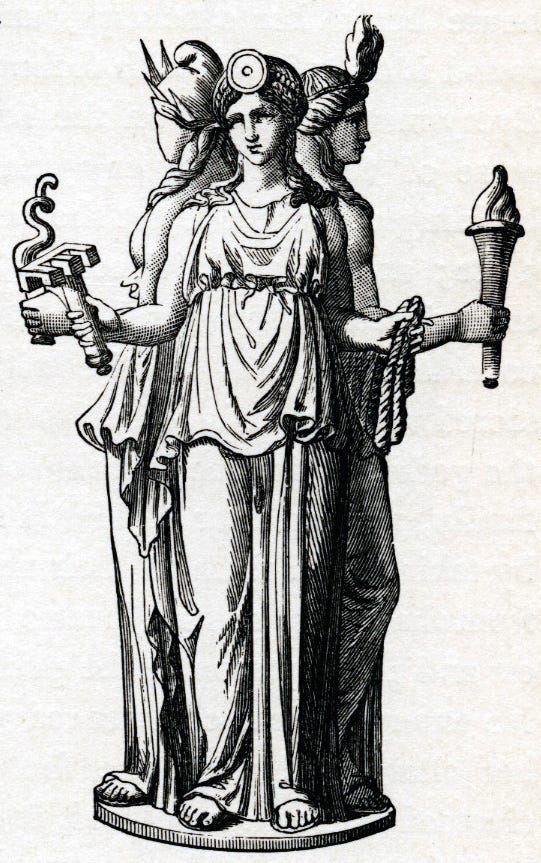
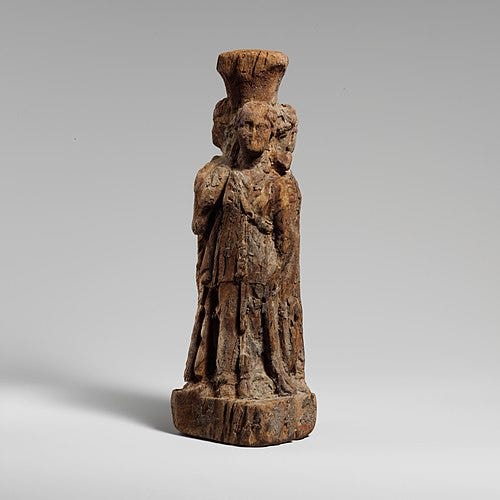
The town of Tomis on the western side of the Black Sea had a rich variety of religious worship in Roman times. Statues, inscriptions and altars have been found dedicated to what we might consider the “traditional” Greek/Roman gods such as Juno, Jupiter, Dionysus and Apollo, as well as the deities of Eastern cults such as Isis, Cybele and Mithras. Local deities, such as the Thracian Horsemen and the intriguing snake-god, Glykon, also appear. We know that Hecate, goddess of the crossroads and witchcraft, was worshipped there as several statues of her and her three sides have been discovered in 1962.
This gave me the idea that led to worship of Hecate being included in my novel, Poetic Justice, but it was difficult at first to imagine the extent to which religion was an everyday part of the life of the people of Tomis. The UK seems at first consideration, a secular society. Yet I can see a church spire from my garden and hear the bells when there is a wedding, the shops are currently full of Easter Eggs, though we have only just got over Christmas. The calendar is shaped by a tradition of religious festivals, down to the days of the week. I have lived in the Middle East in a religious society and the call to prayer was sung out several times a day from the mosques: we could hear at least three from our house and it quickly became part of the new day-to-day life, as did having a weekend that was focused on Friday being the holy day.
So I tried thinking of a society with a background of hundred years of religious worship, that had been added to over the years and was still current. This was the Tomis that would have been encountered by the first century poet Ovid, who is the main character in Poetic Justice. He lived in Tomis - well, he was exiled there - from 9CE to (probably) 17CE. We can’t tell exactly what buildings were in Tomis at that time (our Roman era evidence tends to date from later), but I would guess that like many other towns in the Roman Empire, Tomis would have had a temple to the Capitoline triad of deities, Jupiter, Juno and Minerva. There may well have been a temple to Isis as in Pompeii, and worship of the Asian goddess Cybele had already spread as far as Rome, so why not Tomis? Archaeological finds make it clear that there were visual reminders throughout the town in the form of artwork and inscriptions as well as the more obvious temples.
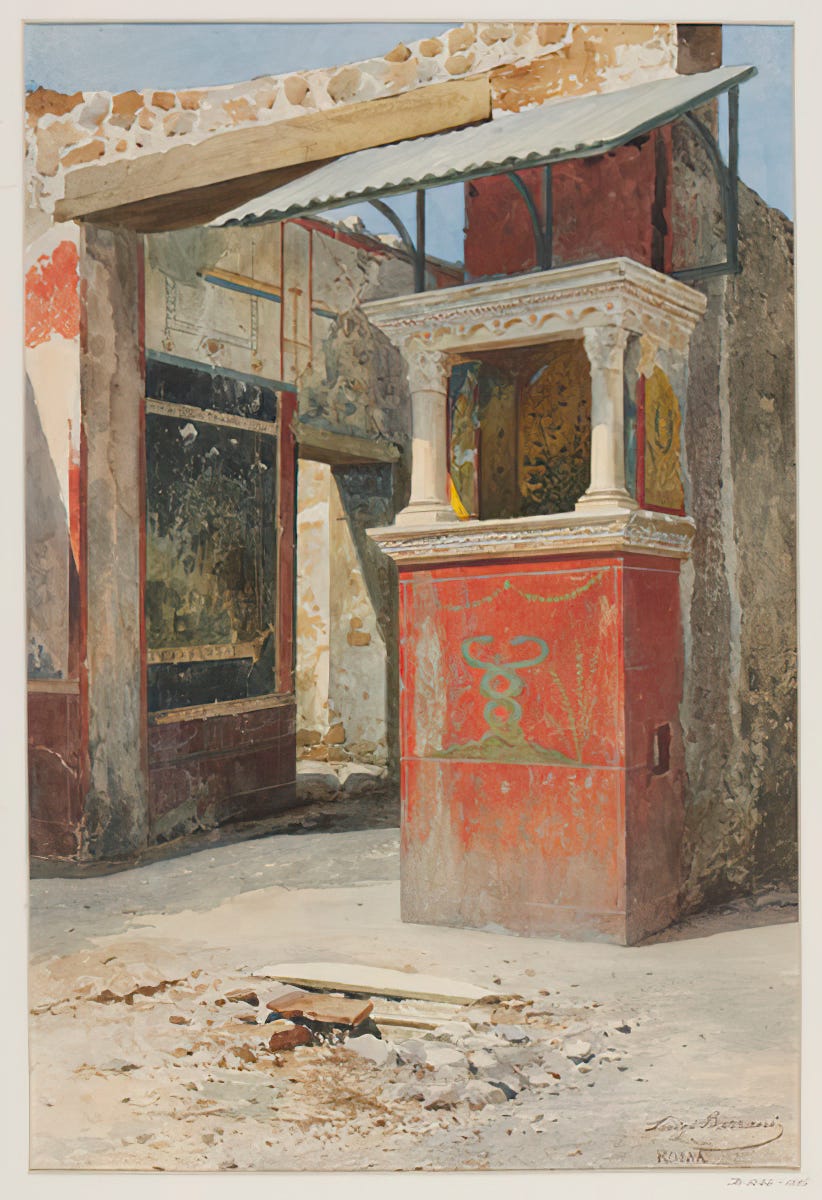
I see Ovid wondering through a town full of small shrines and slightly larger temples, then returning to his own house in Tomis and the shrine he kept there, a traditional Roman lararium. We know he had one because he tells us about the images of Augustus and Livia that have pride of place, along the traditional Lares, the gods of the home
Finally, I looked at Ovid’s own works. At the time of his exile he had just finished the Metamorphoses and was working on the Fasti. Both feature the gods and myths of Greece and Rome prominently, the latter even describing the Roman year in terms of religious festivals. And if Ovid needed the gods for the material of his poems, then it worked the other way too:
Di quoque carminibus, si fas est dicere, fiunt
tantaque maiestas ore canentis eget.
Even the gods have their existence through songs, if it is right to say so. Majesty on that scale needs the voice of a poet. (Ovid, Letters from the Black Sea, 4.8)
For more about Hecate and Poetic Justice, check out Aspects of History and my article here.