
Tiberius the cat
Of course the cat steals the show - it's what cats do!

Why, when I started the series of novels starring the poet Ovid, did I give him a cat?
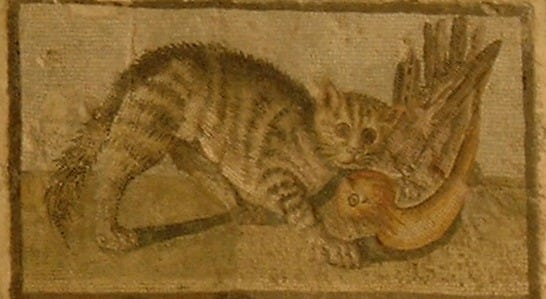
A little guilt came into it (read the beginning of Poetic Justice and you see why) but mostly it was down to our cat, Frannie. Frannie turned up in our back garden in Qatar during the Covid pandemic. Keeping a “garden” cat was quite common in Qatar, and many people even took responsibility for feeding a cat colony. Frannie soon had other ideas though and moved into the house. We had her checked out by the vet and she had been neutered and chipped and was very healthy. She was the last in several cats we adopted or helped look after: we had used Jane Austen characters to name them and it was the turn of Mansfield Park’s heroine, Fanny. My teenage daughter refused this for some reason and so we named this cat Frannie.
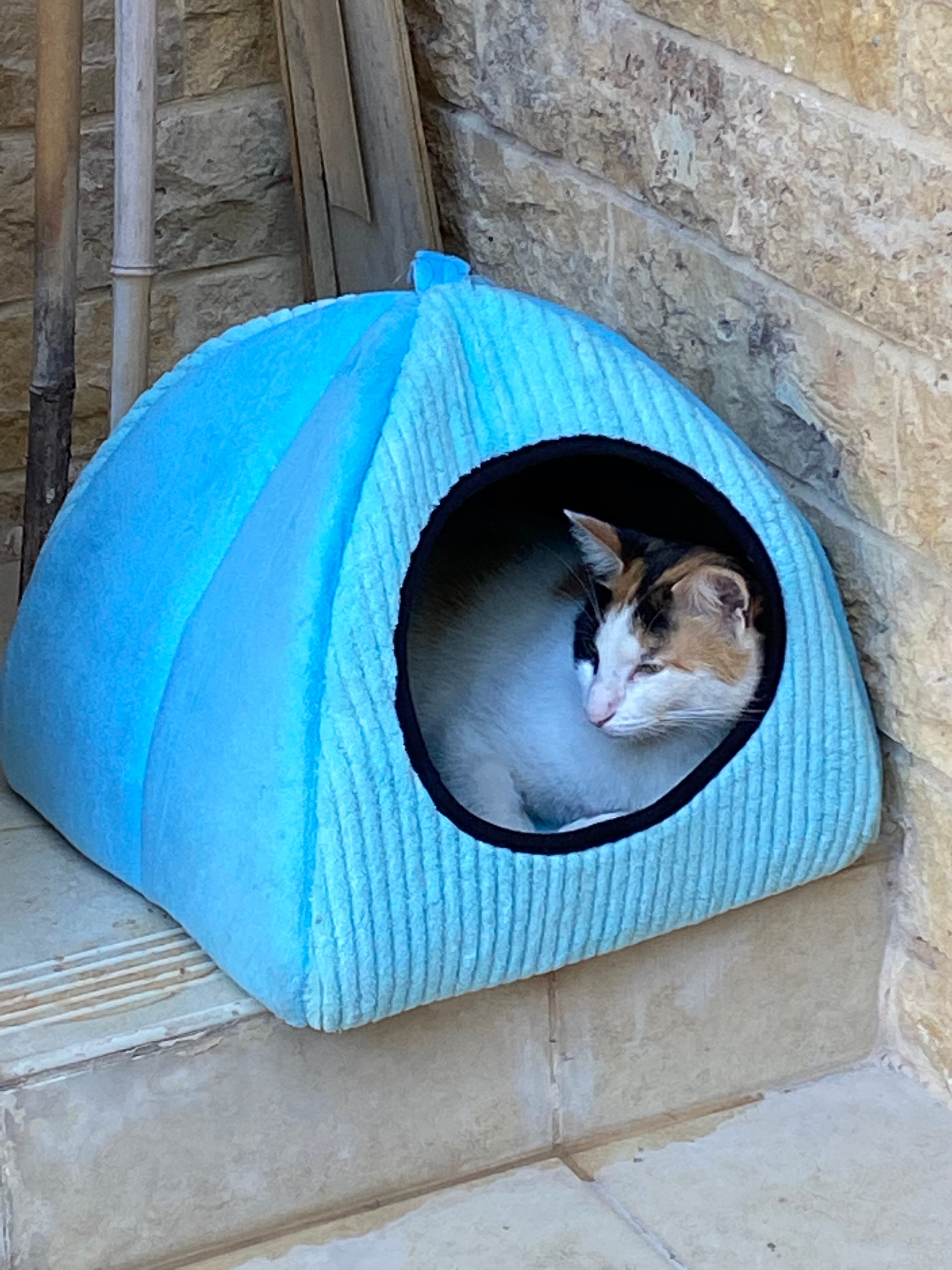
Frannie has adapted to life in the UK with cat-like ease, though she still doesn’t like rain. But when I decided that Ovid needed a cat, he adopted a calico kitten who strangely enough, looked and sometimes behaved just like Frannie.
I realised that I didn’t know how widespread cats were around the first century Mediterranean area. But then I discovered that Tomis had a Temple of Isis, the Egyptian goddess, and with that my imagination got going and persuaded me that, as Isis worship spread through the Roman world from Egypt, the priests and priestesses would bring cats from Egypt. And once the usefulness of cats in keeping down rodents was established, other people would acquire them. So it would be with Ovid.
Ovid returned home, via the Temple of Isis. A patchwork kitten with blue eyes sat on his shoulder, digging its claws into his cloak and meowing into his ear.
“You are a poet, little one,” said Ovid, as the two of them entered the house.
The kitten relieved itself and Baucis tutted as she gently unhooked its claws from the damp cloak. Philemon turned from mopping the floor and said, “Is that a cat?”
“Here,” Baucis said as she passed the kitten back to Ovid. “I’ll quickly rinse the cloak. What are we calling this little boy?”
“He’s a boy? How do you know? You are amazing Baucis.”
“Not really,” said Baucis, already turning to take the cloak to the back of the house. “He has balls.”
“Good Gods, so he does,” said Ovid. “You are going to be the terror of the ladies, aren’t you, boy? We’d better think of a good name for you. I know – we shall name you after Tiberius.”
“The Emperor’s heir?” asked Philemon. “That old man?”
“A mark of my esteem for Rome’s premier general,” said Ovid solemnly. “Who also has balls.”
“You shouldn’t make jokes about high-up people like that,” said Baucis, coming back into the entrance hall. “Give me that animal, and let’s see if we can persuade him to grow up into something useful. We’ve more mice here than I’d like.” (excerpt from “Poetic Justice”)
As well as many animals having a specific function in a household - guard-dog, vermin-catcher - there is evidence for people in the ancient world keeping animals that were purely pets. We find out from the love poet Catullus that his lady’s sparrow hops on her finger, while Ovid tells us that his Corinna has a parrot all the way from India and Martial writes an epigram to Issa, the puppy of Publius. Pets were buried and commemorated too: a dog called Pearl tells us in her epitaph, “molli namque sinu domini dominaeque iacebam et noram in strato lassa cubare toro.” (“I used lie on the soft lap of my master and mistress and when tired I knew to go to the bed made for me.”)


I felt then that it would not be completely fantastical for Ovid to have a cat and Frannie agreed. It did however give me some food for thought, for in contrast with all this evidence for pet ownership was the vast industry that surrounded the collection of animals for the amphitheatre. Around the Roman world, animals were herded into ships and transported to Rome and other places so that they could be hunted in front of an audience - for entertainment.
I shall sign off with the obligatory gallery of Frannie the Qatari cat:


Tiberius the cat is a great character. Glad to see him make a reappearance in Written In Blood! Of course - how could he not be in it?!
As far as I know, pet cats were not common in the first-century trans-Danube, so this is one of Germanic priestess Aurima's first surprising experiences in Rome (from "Amber Road"):
“What will you have in our house?” I had asked her [later].
I thought she might say, I will have a fountain that runs day and night, or Floors that are heated in winter, or some other refinement of civilization she had seen in Rome. Instead this iridescent opal of a girl, who had known animals only as creatures to eat or be eaten by, told me, “When I was in Nina’s garden, a little beast jumped out at her. I swung my hand like this to hit it away. ‘No!’ she said. She took the beast in her arms and rubbed it, and it closed its eyes and sang to her. That is what I want in our house. A cat like Nina’s, that smiles and sings when I hold it.”